Welcome back to Human, Anyway!
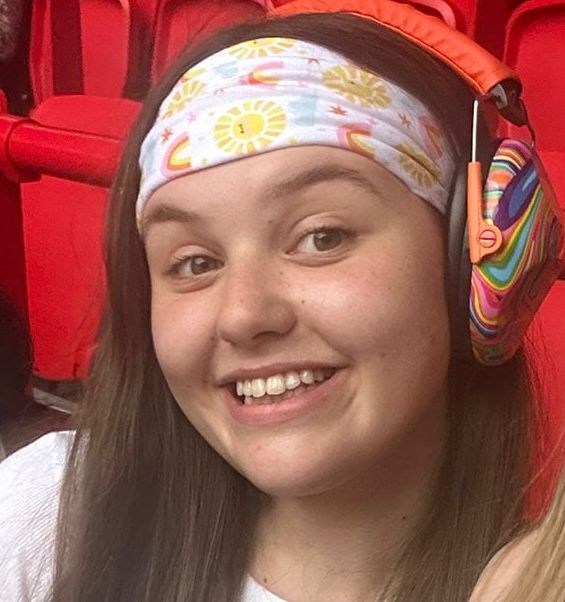
I am so honoured to share this interview with you. Meet Mia! Her words are deeply personal and vulnerable, yet they shine with courage, honesty, and hope. Reading about her experiences in education, the challenges she faced, and the incredible strength she has found in understanding herself was truly moving. Mia is not only inspiring in the way she advocates for change, but also in how she embraces her unique perspective and uses it to make the world a more compassionate and inclusive place. I feel so lucky to know her and to be able to share her story with you.
1. Can you start by telling us a bit about yourself?
Hi, I’m Mia and I’m 19 years old. I currently work as an autistic expert by lived experience where I co-deliver Oliver McGowan mandatory training on learning disabilities and autism. I left education early due to my needs not being met within the mainstream setting I was at.
Education to me means empowerment. Being educated is one of the most powerful things you can be. My dream and goal in life is to make or support in making changes to the education system. I’m currently studying BSL as my main form of education and one day hope to be a RSLI (Registered Sign Language Interpreter).
2. When did you first learn that you’re autistic, and how did that shape your experience in education?
I first learnt I was autistic when I was 15, so during secondary school. At this point I was struggling significantly in day to day life. After the Covid pandemic, I struggled to reintegrate back into society and began to suffer with severe anxiety. My experience in education throughout primary school was generally positive although I grew up always feeling different and others could see and sense I was different.
My autistic traits were always there, they were just labelled as other things such as ‘Mia’s just anxious’, ‘she’s away with the fairies’, ’She’s just a sensitive girl’ etc. It was secondary school where I struggled much more and this began with bullying because people knew and could tell I was different despite my efforts to fit in. After the pandemic when I tried to go back to school- I could no longer cope with the environment due to my sensory needs and no longer being able to mask as well as I did before the pandemic.
Prior to receiving my autism diagnosis, my experience of secondary school was traumatic due to me being misunderstood and mistreated by members of staff.However getting my autism diagnosis was life changing in the best way. I now had an answer as to why things were so difficult for me and it was so validating to have an answer. I now could explain why I did things in the way I did and explain the things I struggled with, and within school I could do more to better meet my own needs as I now understood myself as well as staff could try and sympathise with me and my struggles and needs.
3. Looking back, what was school like for you as an autistic person?
Unfortunately my experience of school, more specifically secondary school, was incredibly traumatic- leading to me developing and being diagnosed with C-PTSD (Complex Post Traumatic Stress Disorder). I was always considered a ‘model student’ but I was often labelled as ‘shy’ or ‘away with the fairies’. I was a grade A student but was told I needed to ‘speak up more’ and ‘put my hand up more in class’. I found maintaining relationships and keeping up really difficult. I enjoyed primary school because of the consistency in routine, structure and familiarity. But I also enjoyed the academic side of education and I loved learning, more specifically maths, music and drama. I would spend hours a day doing maths for fun. But on the whole there were many more negatives than positives and I know a lot of autistic people share that similar experience.
4. Were there any teachers, mentors, or environments that made learning easier or more positive for you?
Yes I had several teachers that made learning really positive. During my difficult time within school after the pandemic, one teacher in particular really made an effort to make things more accessible for me. They worked and created a safe space for me to share my feelings and about things that I was struggling with. This teacher shared they are also autistic and they supported me and helped me on that journey of discovering what being autistic means to me.
Having this space where I could ask questions and have my needs met and be understood was honestly life changing for me after my continual negative treatment. They helped me in finding other ways to communicate when verbal communication was difficult, they helped me find and use positive coping mechanisms, and made me feel less alone by sharing their experience. They were curious about my experience and asked questions and helped me to see that being different isn’t bad, bring different is beautiful and difference is needed in this world. Without this teacher, I don’t think I would be where I am now in terms of my self acceptance and advocacy skills I have.
5. What were some of the biggest challenges you faced in education?
I faced many challenges within education. This included sensory overload, communication difficulties, relationship difficulties, being misunderstood and so much more. But also with the demand of education and the pressure to succeed. The sensory environment was so overwhelming as you’ve got bright classroom lights and bright whiteboard screen, the buzzing electricity, the smell of pubescent teens, the hot sweaty classroom, painfully sweet deodorants that were sprayed, the sheer overwhelm of the school canteen, the busy corridors. It was sensory hell so whilst managing all of that as well as experiencing extreme anxiety and then being made to sit still in a seat for up to 5 hours a day. And still expected to learn and achieve as much as my neurotypical peers. Add masking to that list too. I’d then have to go home and work 10 times as hard to catch up on all the work I’d missed because of being overwhelmed as well as homework. I felt like there was no escape and I could never relax without feeling the pressure of needing to achieve.
Then along that I experienced bullying for not having friends, not looking right, not saying the right things, for being different. And on top of all of that I was being misunderstood and severely mistreated by the very staff who were supposed to keep me safe in school. So after each day I’d be physically, mentally, emotionally exhausted with no chance to rest and recover as I’d have to get up and do it all over again the next day. I did that until I couldn’t anymore. My mental health took a dramatic decline, I therefore left education without receiving the qualifications I worked hard for.
6. What kinds of support or accommodations helped you the most?
For me I found having understanding teachers the most helpful thing, and being understood helped me access so much more. I also found having access to sensory tools and sensory aids such as fidgets and ear defenders really helpful in allowing me to access the school environment to manage my sensory needs. I also had a reduced/ adapted timetable, visual aids, access to a sensory room/ quiet space, extra time in exams and homework as well as mentoring and 1 to 1 support in classrooms, time out pass.
I found all of these helpful but often struggled with the inconsistency of peoples understanding within a large secondary school although these accommodations were approved I had some teachers challenge me and attempt to take away some of my support tools/ strategies. I found them all really helpful but probably being understood was the most helpful thing, after not being understood for so long it really made a difference. I found the time out pass really valuable too as it’d allow me to have time out of the classroom to regulate before going back in which allowed me to learn much more.
7. How do you think schools and universities could become more autism-friendly?
I think it firstly starts with having a standard mandatory autism training for all education settings and providers. This training would need to be co-produced and co-delivered where autistic people can share their lived experience within the training. Being understood is so important, it’s hard to support individuals when you have limited understanding of their experience. I would also make a standard of autism training for pupils within primary schools.
I also think classrooms need to be set up and equipped with sensory equipment. And having sensory and emotional regulation skills at the heart of the curriculum, as no child (neurodivergent or not) can learn if they’re dysregulated.
8. What do you wish teachers understood better about autistic students?
I wish people better understood masking and what this looks like for autistic people especially autistic females or those assigned female at birth (AFAB). Masking is so prevalent in autistic people and is proven to massively increase the risk of the individual developing anxiety, depression and suicidal thoughts. Autistic individuals are 9 times more likely to die by suicide compared to non-autistic individuals, this statistic shoots up to 13 times for autistic females/AFAB. So whilst some people may seem ‘fine’ in school they may be masking their crippling overwhelm and anxiety, then later breaking down at home. I also wish they better understood sensory overwhelm/ overload and how difficult this can make it to learn.
Autistic people within mainstream settings are held to the same standard as their non-autistic peers without having a level playing field. I think it would help being open as a teacher to discussing someone’s likes and dislikes and needs within the classroom environment and exploring what reasonable adjustments can be made to allow that individual to access the classroom.
9. How do you manage sensory or social demands in busy learning environments?
In busy learning environments I manage the sensory demands by utilising coping strategies and sensory aids and tools. After receiving my autism diagnosis I felt more validation and allowed myself to use the things that I found helped me so this for me looked like using my fidgets more openly as well as using ear defenders. But also learning my limits and my boundaries and not feeling ashamed for needing to leave or take a break. Having 5-10 mins out to regulate then allows me to go back into that environment and engage better. Before I would push myself too far and stay in environments that would overwhelm me and I’d then later on have to deal with meltdowns and shutdowns which were exhausting and painful. So taking a break and using sensory aids helped me manage my sensory needs and overwhelm.
Social demands I used similar tools as in fidget aids and comfort items. But then also putting less pressure on myself to socialise and less pressure on trying to decode neurotypical people’s style of talking. Setting boundaries and allowing myself to leave unapologetically if I was getting overwhelmed. Also having and using communication aids such as communication cards such as ‘I am feeling overwhelmed, I need to leave to regulate but I will return, please be patient’. Having access or ability to do all of these things helped me so much to engage in learning within the classroom.
10. How has being autistic influenced your learning style or interests?
Being autistic influences my learning style in the sense that I thrive off structure and processes. So for me this is why I loved maths so much because everything had a structure and a process and you were either right or wrong in questions. Whereas in English literature and language I really struggled with the creative nature of it and how there wasn’t ever a ‘right’ or ‘wrong’ answer, there wasn’t a specific process to follow so I’d often be confused on how to be successful within the topic. I am absolutely a visual learner which is why I loved maths so much as well as learning BSL as they are both visual. I like being able to visualise what I’m learning whether that is on paper or physically seeing something and using resources. I also am very focused within interests- it is hard for me to engage with things that I have no interest in.
11. Why have you chosen to learn BSL (British Sign Language) and what do you most enjoy about it?
I initially began to learn BSL after I was starting to look into ways how I as a person can make the world more accessible for disabled people and this started with me educating myself on issues around disability, more specifically access issues and therefore what I can do as an individual to reach this goal. Naturally a huge access issue for the deaf community is them being unable to access hearing environments.
Learning BSL is the smallest thing I could do to make myself as a person more accommodating so it was a priority for me to do so. I started having 1 to 1 lessons with Adel back in November 2023 and since have continued to learn and progress in my BSL journey. I love learning BSL, for me as a visual learner I adore the visual nature of the language and having something that feels so much more expressive than spoken English.
For me, at home I use BSL a lot to help me to communicate with my family at times when it feels difficult to use verbal/ spoken language. I find verbal communication overwhelming and it’s something I have to take a break from so having another way to communicate has been a life line for me! Signing for me also feels so regulating as having my hands moving and communicating is like a form of stimming and just brings me so much joy and it makes communicating much easier than verbal communication is.
12. What advice would you give to other autistic students who might be struggling with school or college?
I would always encourage people to speak to someone about their struggles whether it’s a parent or friend as no one should struggle in silence. I’d then encourage them to look at what support they have and what additional support they may need, what needs aren’t being met. I’d suggest having conversations with the school SENco or disability team to see how you can be better supported and what they can offer. I found writing down my struggles really helpful as when people would ask me in conversation how they can help I would struggle to think and process in that moment or mask and say ‘I’m all good’. So having it written down to then take to someone to say this is what I’m finding difficult. This for me made it much easier to discuss and find solutions with people as I did most of the thinking prior to having the discussion and then there was less reliance on verbal communication in that situation. I’ve learnt the power of having self acceptance and being ‘kinder’ to myself, it’s okay to need support.
Needing support isn’t a shameful thing, you deserve to be supported. It’s okay to be different and it’s okay to need to reach out to others. Self acceptance is a journey but a journey so worth going on to learn to be unapologetically yourself. Things will not always be this difficult, school is generally not a place where autistic people can thrive and that’s okay. There is so much out there in the world, although it might feel like education is everything but it will be okay.
Everything is always okay in the end and if it’s not okay then it’s not the end!
13. What message would you like to share with educators about supporting autistic learners?
There is so much I’d share with educators. I think sharing autistic people’s experiences is so important to help staff and educators understand how detrimental school can be and the damage having unmet needs can have. If teachers and educators had a better understanding of autism and were better equipped to meet need then there would be a huge reduction in how many autistic people leave education traumatised. I think also seeing that all behaviour is a form of communication. Within education people are very quick at giving the label of ‘naughty’ or ‘disruptive’ or other negative terms that are often used before considering that the individual may have an unmet need which they are trying to communicate. Ultimately- acting with kindness.
Kindness is one of the most powerful tools. I don’t expect people to be educated or understand autism if they’ve never had the opportunity to be educated. But I do expect kindness. If society and education system acted with kindness without holding everyone to the same standards, instead seeing individuals as individuals, I think the education system as well as world would be a nicer place.
14. Finally – what’s next for you in your educational or personal journey?
I have sooo many goals and dreams I’m working toward. Educationally my next steps are progressing further with my BSL skills and continue to complete up to hopefully level 6! I one day would love to become a RSLI (registered sign language interpreter) to support the deaf community as well as being able to support as many people in accessing the world.
My life’s mission is to make changes within the education system to ensure that all autistic and disabled people have access to a fair and equal education. Education is not a privilege, it’s a human right! I hope to continue delivering training and using my lived experience to make systematic changes. I want to make sure I use my voice to advocate for change- for the future me’s of the world and for every other disabled person, and for those who may not be able to advocate for themselves.
What is Human, Anyway?
Human, Anyway: Stories of Life Beyond the Mould
A space for stories that challenge what ‘normal’ means.
Human, Anyway is a collection of personal stories, interviews, and reflections from people living with disabilities and neurodiversity.
Through writing and shared conversation, it shines a light on the everyday challenges, and quiet triumphs – of navigating education, work, healthcare, and society when you don’t fit the “standard” mould.
It’s about visibility, voice, and the power of being unapologetically yourself.


Leave a Reply