
Welcome back to Human, Anyway! If you’re new here, I’m so happy you chose to join our wonderful community.
If you’re feeling like you’re stuck in a rut, every day is the same old…

You snooze your alarm 7 times, only to roll out of bed in a panic, because now you’re running really late. You gulp some coffee and throw on some clothes, and somehow make it to work in the nick of time (just), all whilst clutching your phone, eyes glued to the screen.
If this resembles your day, then you need to stick around.
Today I’m sharing the first of my Top 10 tips for creating a better day, so you can optimise those hours you’re awake, not only to be more productive, but also to find those important moments of joy.
So go grab yourself a drink (hydration reminder), and get ready to transform your life.

Before we dive into my first tip, it’s important to remember that whilst these tips are meant to be easy to implement straight away, don’t panic, punish yourself, or give up, if you start to slip back into your old ways. After all we’re Human, Anyway.
Being kind to yourself is key to making progress. Allowing ourselves to make mistakes and learn from them, isn’t just teaching our brain determination, and resilience, but forgiveness. Forgive yourself for that one morning when you spend an hour doom scrolling, because there’s nothing stopping you from trying again tomorrow (literally). Strive to be 1% better today than you were yesterday. Spend one minute tidying your living space today, 2 minutes tomorrow… But, I digress, so more on the 1% method in a future blog.
Back to the discussion at hand.
Tip 1: Put your phone away
As a modern society, using mobile phones for every task, large or minimal, has become a culture of its own. But isn’t it just a little depressing, that some of us can’t even go to the toilet, brush our teeth, drink a cup of tea, or walk downstairs without peeling our eyes away from that thin little gadget?
But how exactly can we hold ourselves accountable, and finally free ourselves from our phone, for good?
And no, I’m not talking about going back to caveman days, where our source of entertainment would look something like seeing who can stack the highest pile of rocks. I’m talking about MINIMISING phone usage, and not letting it control our lives.
Let’s find a good REASON to use our phones less.
We’ve all heard of ‘blue light’, but did you know, that scrolling or watching things on your phone before sleep, not only causes eye strain and pesky headaches, but leads to more serious health issues, such as
poor sleep quality,
insomnia,
and a heightened risk of obesity.

And that’s not me trying to scare you, but actual scientific research, plus a multitude of case studies backing this up.
Intrigued to see some more research from actual doctors? Check out this study ‘Long-term effect of mobile phone use on sleep quality: Results from the cohort study of mobile phone use and health (COSMOS)’.
Not only does frequent and high levels of phone usage result in sleep disruption, but is linked to triggering mental health issues, anxiety and depression. (You can ready marabout that by King’s College London here: https://www.kcl.ac.uk/news/teens-with-problematic-smartphone-use-are-twice-as-likely-to-have-anxiety-and-many-are-eager-to-cut-down)
Now we have some good reasons to limit our phone activity, let’s try some methods to bring more joy, peace and focus into our everyday lives.
Better Sleep
If you struggle with sleep, step 1 is to try putting your phone in a different room. And before your brain tries to make excuses, (I can almost her them now) ‘but I set my alarm on my phone… blah blah blah’. You really DON’T need your phone anywhere near your bed. Why not use a good old fashioned alarm clock?

Try to wind down by either reading, and if that’s not your thing, try listening to an audiobook. If, as a neurodivergent person you find it difficult to focus on long texts or listening to lengthy passages, try a magazine instead.
You can also wind down with these easy tasks before bed, which will make getting up easier in the morning:
- Lay your clothes out ready. Choose exactly what you will wear, and this will help lessen decision fatigue when you wake up the next day.
- Lay out your mug, breakfast utensils (plus cereal etc.) ready.
- Think of 3 things that went well or you are grateful for, and write them in a journal or notebook.
- Spend a couple minutes stretching. Make sure you choose stretches suitable for you. These could be standing, sitting, or lying down.
- Spend 5 – 10 minutes planning for the next day. This could simply be making a list of what you need to get done, or checking your schedule. Making a plan for the next day, starting with your morning activities, will give your brain a reason for waking up and getting out of bed!
Better Start to Your Day
Now that your phone is away from your bed, waking up without it lying right next to your head, means, it won’t be the first thing you reach for. This will make step 2 much easier to achieve!
For step 2, try to have the first hour in the morning, completely phone free. No checking social media, or emails. Focus on your morning routine, and you might actually find that your day starts with less chaos, less anxiety and more awareness of the world around you.
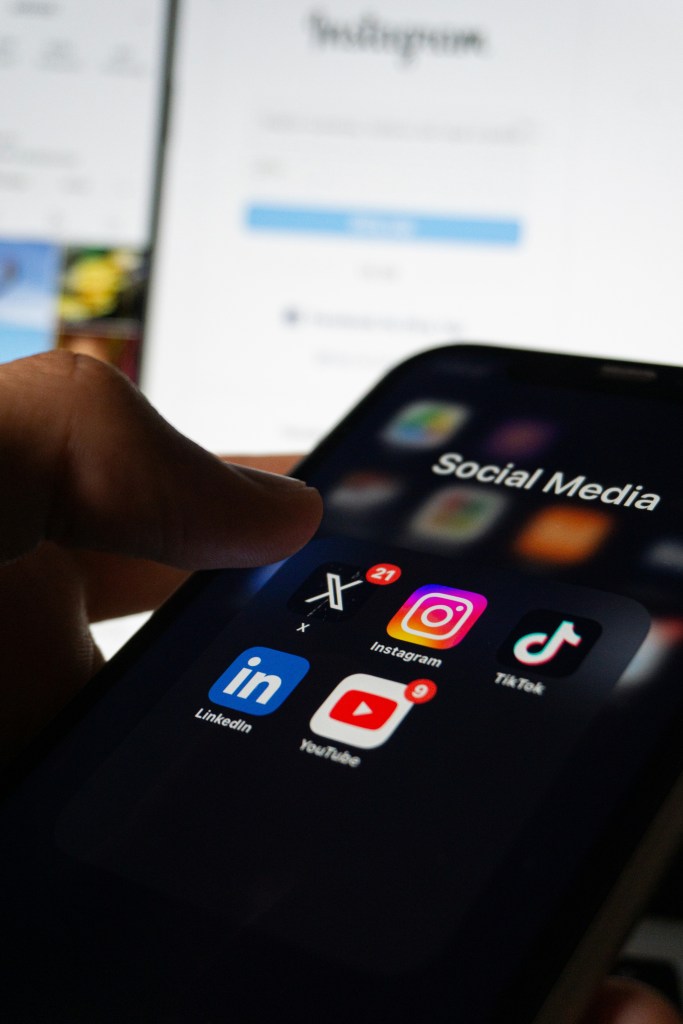
Instead of scrolling to wake yourself up, why not:
- Try a few stretches (adapt these to your ability).
- Open the window and take a few deep breaths of fresh air.
- Splash some cold water on your face.
- Turn on all the lights! Using light therapy to your advantage is a MUST. The brighter the lights, the more awake your body and mind will feel. (Remember colder and brighter lighting for waking up, warmer and softer lighting for going to sleep).
General Productivity
During the day, it can be tempting to reach for your phone. And that’s not because you lack will power (that doesn’t exist). After scrolling, your brain hits extra levels of dopamine (also called a dopamine hit). Generally, these levels are actually too high, which makes everyday activities which you would normally find enjoyable, much more boring. So then, your brain starts seeking that same level of dopamine hit, which it can only achieve via your phone.

Breaking the cycle can be difficult, and there will be moments when it feels easier to just continue as you were before. So with this in mind, here are a few tips to help you lessen screen time, and have more time for things you enjoy.
- Remove colour from your display. You can change your whole phone to black and white in your settings. Less dopamine from your screen, means you’re much less likely to seek out your phone for the next hit of dopamine.
- Lock your apps. Whilst changing accessibility in settings might work for a day or two, there is no such thing as ‘will power’, so you’ll find yourself hitting ‘ignore’ before you have chance to truly rewire your brain from scrolling. For that extra push and something that will actually work, I recommend purchasing a ‘Brick’, which retails for around £50. https://getbrick.com/
- Fill your day with things that matter to you. This could be activities such as meeting your friends, going for a walk (or wheel) outside, trying an art class, learning a new language (sign language is a GREAT choice btw), booking an exercise class…
Key take away: less phone = more life and better health
 Traffic Light Tutoring